You’ve signed up for a triathlon in Dubai. Or maybe a duathlon. Or an obstacle race that combines running with challenges you’ve never attempted. Now the voice in your head is getting louder: what did I just commit to, and how am I actually going to prepare?
If you’re a runner considering your first multisport event in the UAE, you’re about to discover that training for a triathlon organizer Dubai event is completely different from training for a marathon. If you’re new to running altogether and considering a duathlon organizer Dubai format or a swimming event management challenge, the learning curve is steeper. But here’s the truth: thousands of people train for these events every year. Many have never done multisport before. They train smart, they show up, and they finish.
This guide is your roadmap. It’s built on what coaches in Dubai have learned from years of training athletes, and it’s tailored to the specific challenges of training in the UAE climate.
Understanding What You’ve Actually Signed Up For
Before we talk training, let’s be clear about what a multisport event management race actually requires.
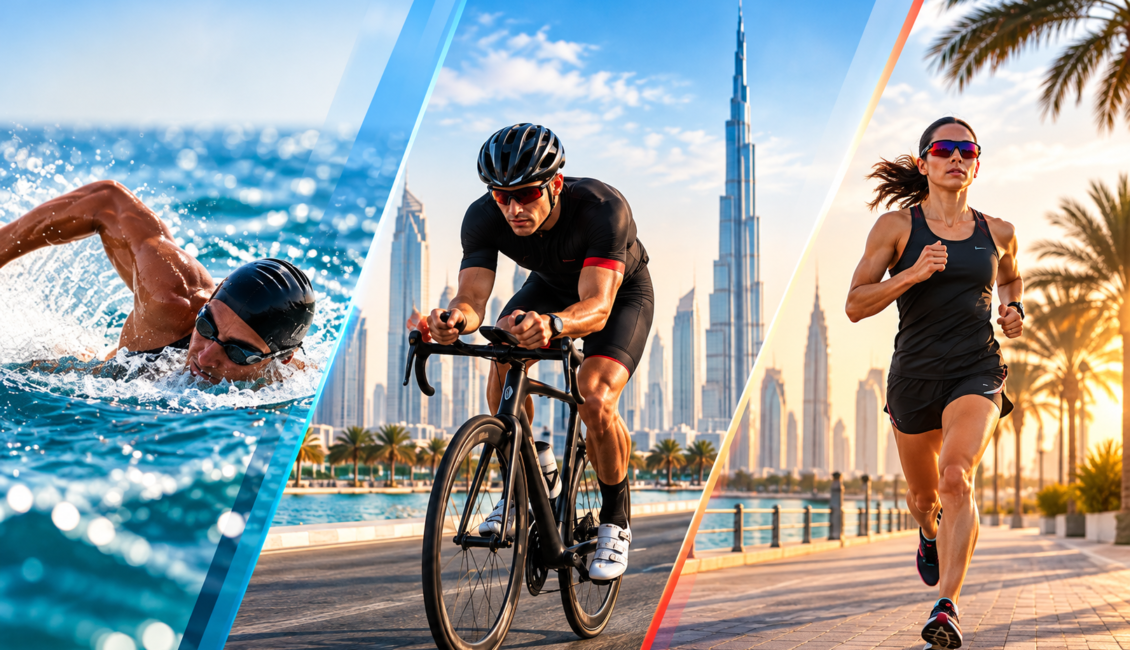
A triathlon has three disciplines. A running race is one. A cycling race organizer Dubai operation is one. You’re now responsible for three. Your body needs to adapt to running, cycling, and swimming. Your mind needs to understand transitions (the moments between disciplines where panic often happens). Your schedule needs flexibility because training across three domains takes time.
A duathlon organizer Dubai event skips the water but requires explosive transitions from running to cycling and back. An obstacle race event management scenario adds power, grip strength, and mental toughness to running. A swimming event management challenge requires water comfort and endurance.
The common thread: you’re not training for one discipline. You’re building fitness across multiple domains while learning how your body responds to fatigue in one discipline before moving to the next. That’s different. And it requires a different approach than single-sport training.
The 16-Week Training Timeline
This timeline assumes you’re starting with basic fitness (you can run 5km without stopping, or you have equivalent fitness in another discipline). If you’re completely new to exercise, add four weeks of general fitness before starting this program.
Weeks 1-4: Foundation Phase
Your goal in these four weeks is simple: build aerobic base across all three disciplines and get comfortable in each one. For running, aim for three runs per week. One long run (starting at 5km and building to 8km). One tempo run (steady pace, slightly uncomfortable). One easy recovery run. Total: 15-20 km per week.
For cycling, two sessions per week if you have access to a bike. If not, use a stationary bike or trainer. One longer ride (20-30 minutes steady). One short, easier ride (15-20 minutes). Total: 50-70 minutes per week.
For swimming, if you’re not confident in the water, consider a swimming event management coaching session with a local coach. Two to three pool sessions per week. 20-30 minutes each. Focus on technique, not speed. Swim 200-400 meters per session.
In Dubai’s heat, train early morning or late evening. Midday training in summer heat is counterproductive and unsafe.
Weeks 5-8: Building Phase
Now you’re adding volume and introducing transitions. Running increases to four sessions per week. Long run builds to 10-12km. Add speed work: interval training once per week. Total: 30-35 km per week.
Cycling increases to three sessions per week. One longer ride (40-50 minutes). One sprint/power session (short efforts at higher intensity). One steady ride. Total: 90-120 minutes per week.
Swimming increases to three sessions per week. One longer swim (building to 800m-1km). Two shorter, technique-focused sessions. Total: 1,500-2,000 meters per week.
Start practicing transitions. After a 20-minute run, jump on your bike. Run a light 10 minutes to understand what tired legs feel like on a bike. These transition sessions don’t need to be long, but they need to happen. Your body is learning something new.
Weeks 9-12: Race-Specific Phase
You’re now training more like you’ll race. Volume stays similar, but intensity increases and sessions get longer. Running: three to four sessions per week. One long run (12-15km for a sprint triathlon). One tempo or threshold session. One interval session. One easy recovery run. Total: 35-40 km per week.
Cycling: three sessions per week. One long ride (60-90 minutes depending on race distance). One moderate-intensity session. One short, high-intensity session. Total: 120-180 minutes per week.
Swimming: three to four sessions per week. One longer swim (1-1.5km). One open-water swim if possible (Dubai offers several locations for open-water swimming). Shorter technique and drill sessions. Total: 2,500-3,500 meters per week.
This is where you practice full or partial race-simulation. Swim 400m, then bike for 30 minutes, then run for 15 minutes. You’ll discover what fueling strategy works, what gear chafes, and what mental strategies help you push through transition panic.
Weeks 13-15: Peak Phase
This is your highest volume week. You’re testing your fitness and practicing race-day strategy. Running: one long run at race pace or slightly slower. One interval session. Two to three shorter runs. Total: 35-40 km per week.
Cycling: one ride at or longer than race distance. One high-intensity session. One moderate ride. Total: 120-180 minutes per week.
Swimming: one longer swim. One open-water session if you haven’t done it. Two shorter sessions. Total: 3,000-3,500 meters per week.
Do a full race rehearsal: complete a session that mimics race distance and pace. Don’t go longer or harder than race pace. The goal is confidence, not heroics.
Week 16: Taper Week
You’re done building fitness. Now you’re preparing your body to be fresh on race day. Running: three shorter runs (20-30 minutes each). Mostly easy pace. One short tempo effort (10 minutes at race pace). Total: 15-20 km.
Cycling: two rides. Both short (20-30 minutes). Easy to moderate pace. Total: 40-60 minutes.
Swimming: two shorter sessions (30-40 minutes total). Easy pace. Focus on technique and feeling smooth in the water.
In Dubai’s sports event management company circles, the biggest mistake athletes make in taper week is panicking. They feel like they’re losing fitness. You’re not. You’re recovering. Trust the process.
Dubai-Specific Training Considerations
Training for a sports event organizer Dubai race requires understanding the environment. Heat is real. Summer in Dubai exceeds 40-45 degrees Celsius. Professional training generally pauses from June through September. The event season is November through March when conditions are favorable.
If you’re training during warmer months, train early morning (before 7am) or late evening (after 7pm). Hydration becomes critical. Electrolyte replacement matters more than in cooler climates.
Sand and dust affect cycling. Equipment needs regular cleaning. Your lungs adapt, but give yourself time.
Running routes need planning. Popular sports event marketing in Dubai highlights routes along the marina, through parks, or along the beach. Use these. They’re established for good reason: they’re safe, well-lit, and have water stations.
Open-water swimming requires specific preparation. If your race includes ocean swimming, train in the sea. Pool training is different. Water temperature, saltwater dynamics, and current awareness are skills you learn through practice, not reading.
Nutrition Strategy for Multisport Training
You’re burning more calories across three disciplines than you would in a single sport. Energy availability matters. General guideline: if you’re training hard most days, eat carbohydrates with every meal. Your muscles need glycogen. Proteins support recovery. Fats provide sustained energy.
Hydration: in Dubai, aim to drink before you’re thirsty. By the time you feel thirsty, you’re already dehydrated. Carry water on runs and bikes. In the pool, you don’t see hydration loss, but it’s happening. Drink after every swimming session.
Race-day fueling: this is where a sports event registration system helps. Most races specify what’s available at aid stations. Test everything in training. Don’t try a new energy bar on race day. Don’t use a nutrition strategy you haven’t practiced. Your gut doesn’t care about good intentions during mile 8 of a run.
Mental Preparation: The Forgotten Training Component
Multisport racing is as much mental as physical. You’ll experience moments of doubt. You’ll want to quit. Mental preparation is how you get through those moments.
Visualization works. Spend 10 minutes three times per week visualizing yourself completing the race. See the swim start, the transition, the bike portion, the run. See yourself strong at the finish. See the celebration afterward. Your brain doesn’t distinguish between vivid visualization and memory. It’s building neural pathways that support success.
Mantras work. Create one simple phrase that carries you through tough moments. ‘I trained for this.’ ‘I’m stronger than this.’ ‘I’m finishing today.’ Repeat it during the race when your legs hurt or your mind doubts.
Pacing discipline works. The biggest mistake at sports event management in Dubai races is going out too fast. You’re surrounded by energy, music, thousands of people. It’s easy to get swept up and accelerate. Stick to your pace for the first half. The second half is where racing happens.
Common Mistakes First-Time Multisport Athletes Make
Training too hard too soon. Multisport athletes get injured because they’re doing too much volume. Respect the progression. Four weeks at easy pace isn’t wasted time. It’s building the foundation you’ll rest on for months. Neglecting one discipline. Some athletes favor their strength. Runners focus on running. Cyclists focus on cycling. In multisport, your weakness determines your placement. If you’re a weak swimmer in a triathlon, the entire race is harder. Train your weakness.
Practicing transitions once. Transitions are where races are won and lost. Some athletes gain five minutes on competitors just through transition efficiency. Practice them dozens of times. Make them automatic. Not fueling during training. If your race is more than 90 minutes, you’ll need fuel. Train your gut to accept food and water while exercising. This is not race day to learn this lesson.
Comparing your training to others. You see someone on Instagram running 80km per week while training for a triathlon. Their training plan isn’t your training plan. Your body, schedule, and experience are different. Follow a structured approach designed for you, not what looks impressive online.
One Week Before Race Day
You’re tapered. You’re rested. Your body is ready. Now it’s about managing logistics and controlling stress.Get your race packet. Review the course map. Walk the bike route if possible. Scout the swim start. Walk the run course. Familiarity reduces anxiety.Test your gear one final time. Your wetsuit (if using one). Your bike. Your shoes. Your race belt with your number. Nothing new on race day.Sleep matters more than you think. The week before the race, prioritize sleep over workouts. Eight hours per night. Your body builds fitness during sleep, not during training.
Race-day preparation: wake early. Eat a familiar breakfast two to three hours before the race (toast, banana, coffee if you drink it). Drink water steadily. Arrive early enough to set up your transition area calmly. Watch the pros. You’re about to be one of them.
Crossing the Finish Line
When you finish your first multisport race in Dubai, something shifts. You’ve proven that you can train across multiple disciplines, overcome doubt, manage the challenge, and achieve something you committed to. In a world where sports event management companies in Dubai are creating increasingly sophisticated race experiences, where training information can feel overwhelming, and where it’s easy to second-guess yourself, you showed up and finished. Your second multisport event may feel more familiar, your body knows what to expect, and your mind understands the process. But your first one is the race that proves what you’re capable of. Train smart. Execute with discipline. Finish strong. Ready for your next challenge? Explore RaceMe, discover upcoming races in Dubai and across the UAE, and find your next multisport event today.